

Best Value Available! 2026 Realistic Verified Free FCP_FSM_AN-7.2 Exam Questions
Pass Your Exam Easily! FCP_FSM_AN-7.2 Real Question Answers Updated
Fortinet FCP_FSM_AN-7.2 Exam Syllabus Topics:
| Topic | Details |
|---|---|
| Topic 1 |
|
| Topic 2 |
|
| Topic 3 |
|
| Topic 4 |
|
NEW QUESTION # 17
Which statement about thresholds is true?
- A. FortiSIEM uses only device thresholds for security metrics.
- B. FortiSIEM uses global and per device thresholds for performance metrics.
- C. FortiSIEM uses only global thresholds for performance metrics.
- D. FortiSIEM uses fixed, hardcoded global and device thresholds for all performance metrics.
Answer: B
Explanation:
FortiSIEM evaluates performance metrics against both global thresholds, which apply system-wide, and per-device thresholds, which can be customized for individual devices. This dual approach allows flexibility in monitoring while ensuring consistent baseline alerting.
NEW QUESTION # 18
Refer to the exhibit.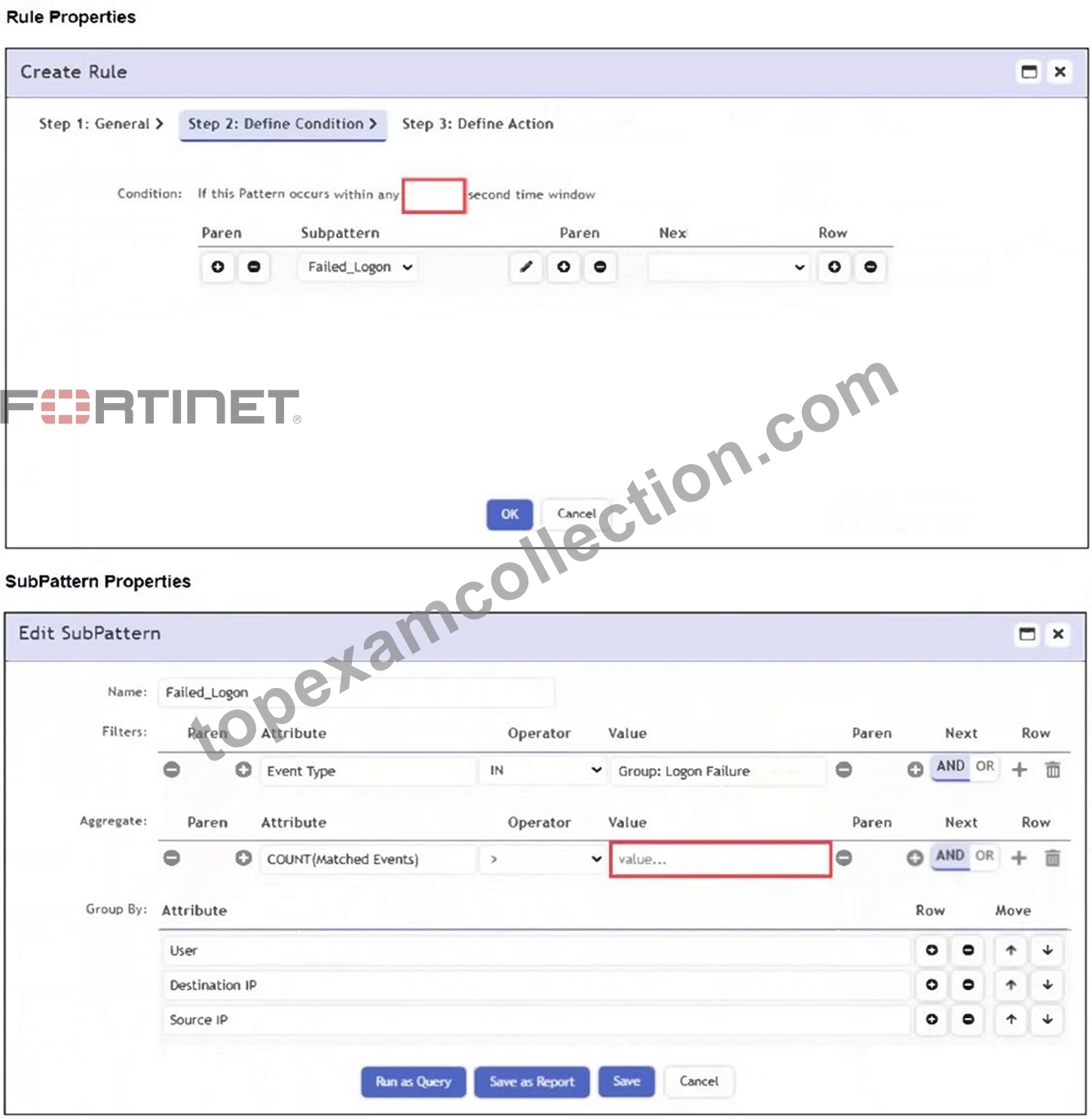
An analyst wants the rule shown in the exhibit to trigger when three failed login attempts occur within three minutes.
What should the values be for the condition time window and aggregate count?
- A. Time window 180 seconds, aggregate count 3
- B. Time window 90 seconds, aggregate count 3
- C. Time window 180 seconds, aggregate count 2
- D. Time window 90 seconds, aggregate count 2
Answer: A
Explanation:
To detect three failed login attempts within three minutes, you must set the aggregate count to 3 in the subpattern and the time window to 180 seconds in the rule condition. This ensures the rule triggers only if three or more failed logins occur in that timeframe.
NEW QUESTION # 19
Refer to the exhibit.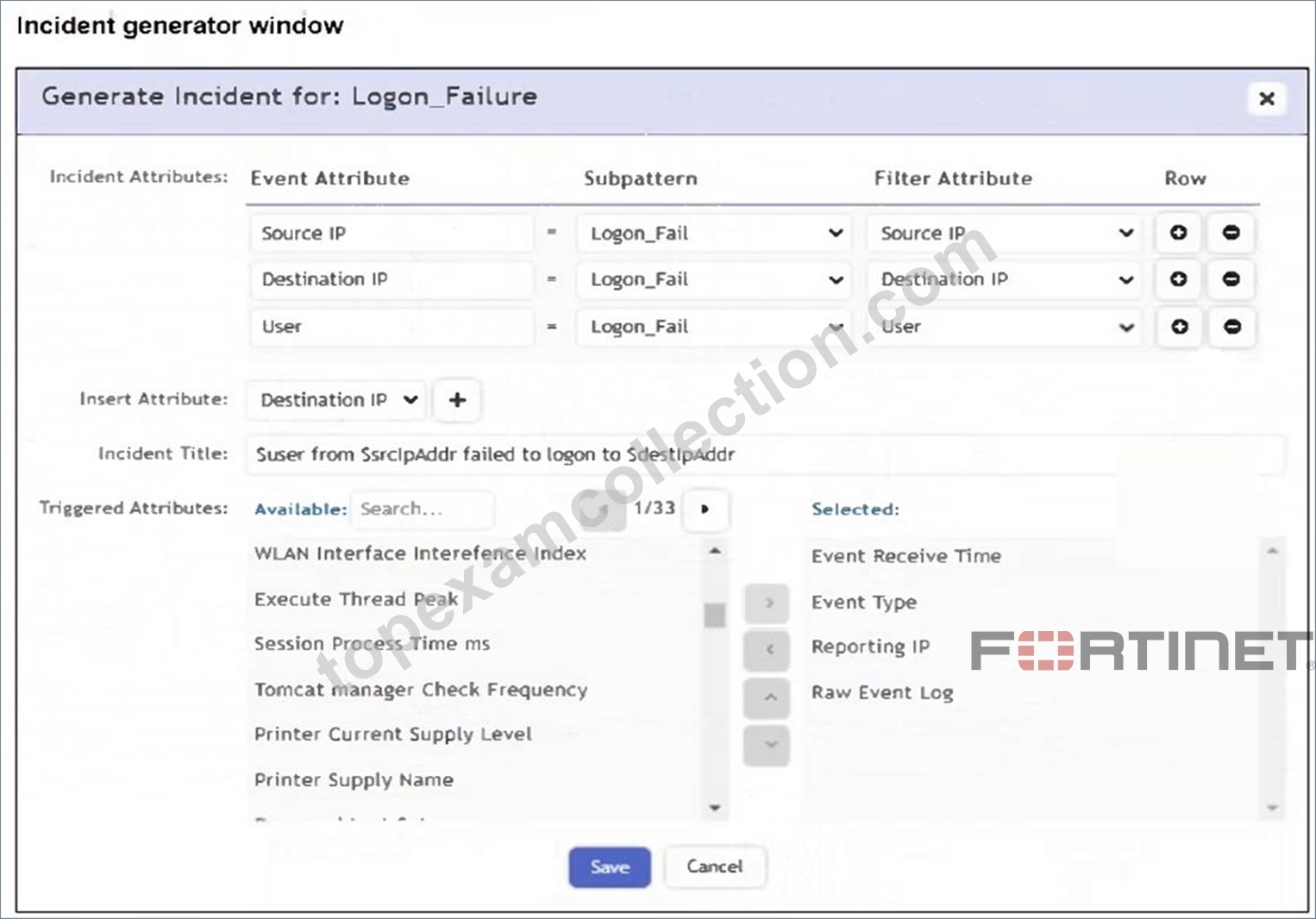
An analyst is trying to generate an incident with a title that includes the Source IP, Destination IP, User, and Destination Host Name. They are unable to add a Destination Host Name as an incident attribute.
What must be changed to allow the analyst to select Destination Host Name as an attribute?
- A. The Destination IP Event Attribute must be removed.
- B. The Destination Host Name must be set as an aggregate item in a subpattern.
- C. The Destination Host Name must be added as an Event type in the FortiSIEM.
- D. The Destination Host Name must be selected as a Triggered Attribute.
Answer: D
Explanation:
For an attribute like Destination Host Name to be used in the incident title, it must first be included in the Triggered Attributes list. Only attributes listed there are available for substitution in the title template (e.g., $destIpAddr, $srcIpAddr).
NEW QUESTION # 20
Refer to the exhibit.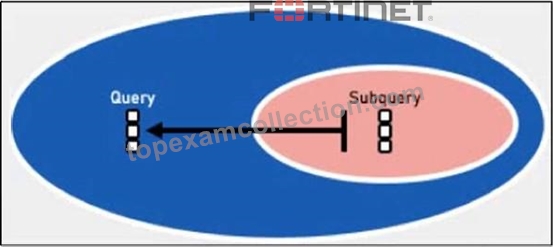
Which two lookup types can you reference as the subquery in a nested analytics query? (Choose two.)
- A. LDAP Query
- B. SNMP Query
- C. CMDB Query
- D. Event Query
Answer: B,D
Explanation:
In FortiSIEM nested analytics queries, you can reference both CMDB Queries and Event Queries as subqueries. These allow correlation between CMDB data and event data for advanced detection use cases.
NEW QUESTION # 21
Refer to the exhibit.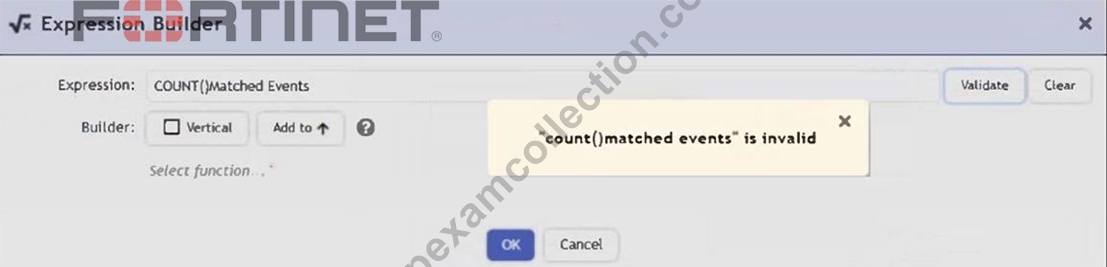
An analyst is trying to identify an issue using an expression based on the Expression Builder settings shown in the exhibit; however, the error message shown in the exhibit indicates that the expression is invalid.
What is the correct syntax to create an expression that generates a total count of matched events?
- A. Matched Events COUNT()
- B. (COUNT) Matched Events
- C. COUNT(Matched Events)
- D. Matched Events (COUNT)
Answer: C
Explanation:
The correct syntax is COUNT(Matched Events) - with proper capitalization and spacing - to generate a total count of matched events. The error in the exhibit likely stems from a formatting issue (e.g., lowercase count() or incorrect spacing), not the logical structure of the expression.
NEW QUESTION # 22
Which items are used to define a subpattern?
- A. Filters, Threshold, Time Window definitions
- B. Filters, Aggregate, Time Window definitions
- C. Filters, Group By, Threshold definitions
- D. Filters, Aggregate, Group By definitions
Answer: D
Explanation:
A subpattern in FortiSIEM is defined using Filters to match specific events, Aggregate conditions to apply statistical thresholds (e.g., COUNT), and Group By attributes to segment data for evaluation. These three components collectively determine how the subpattern functions.
NEW QUESTION # 23
Refer to the exhibit.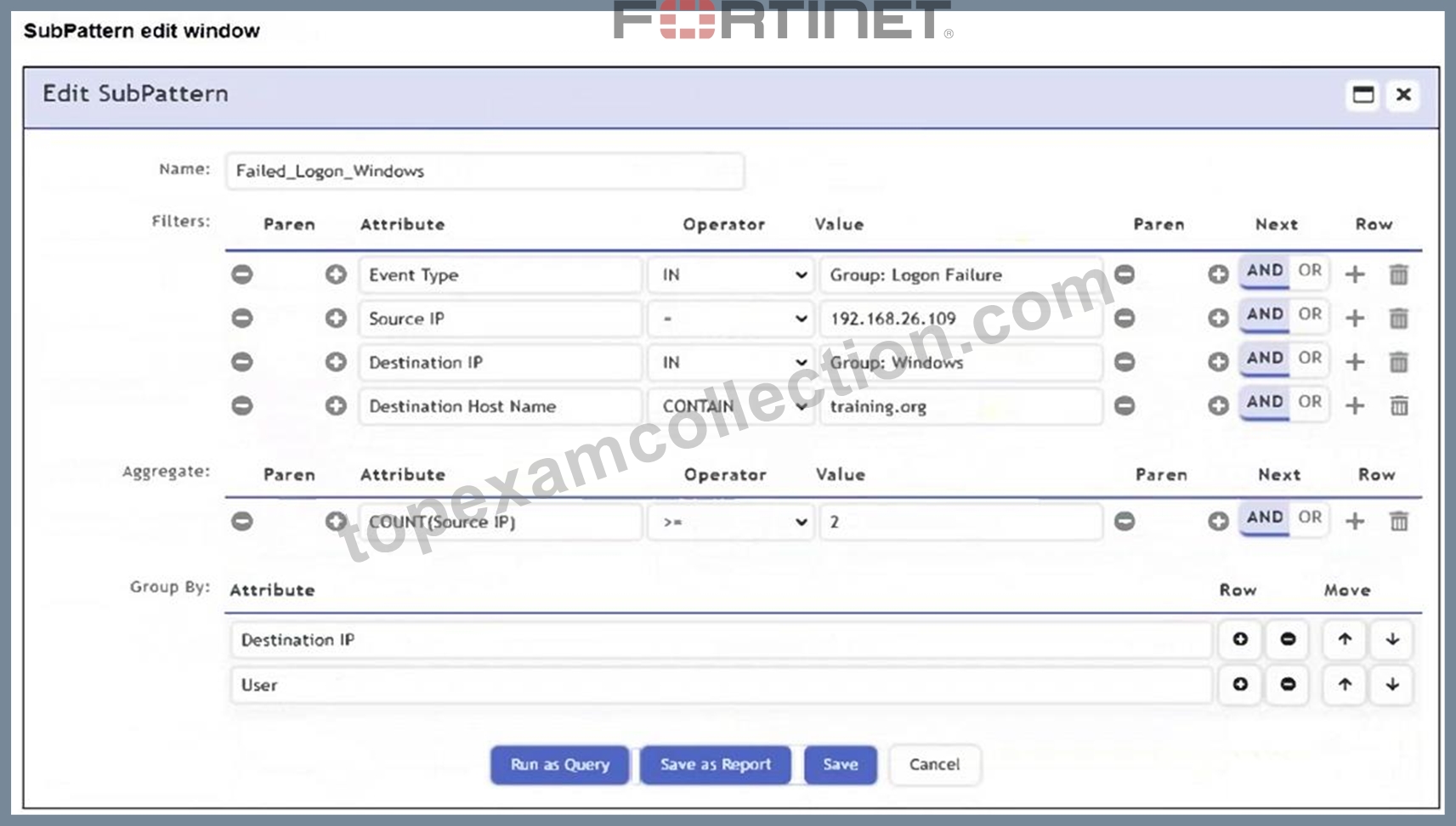
An analyst is troubleshooting the rule shown in the exhibit. It is not generating any incidents, but the filter parameters are generating events on the Analytics tab.
What is wrong with the rule conditions?
- A. The Aggregate attribute is too restrictive.
- B. The Group By attributes restricts which events are counted.
- C. The Event Type refers to a CMDB lookup and should be an Event lookup.
- D. The Destination Host Name value is not fully qualified.
Answer: B
Explanation:
The Group By attributes - Destination IP and User - cause the aggregation (COUNT(Source IP) >= 2) to apply within each unique combination of those groupings. This restricts the count calculation and can prevent the rule from triggering incidents, even if matching events exist in the Analytics tab.
NEW QUESTION # 24
Which running mode takes the most time to perform machine learning tasks?
- A. Forecasting
- B. Regression
- C. Local auto
- D. Local
Answer: D
Explanation:
In Local mode, FortiSIEM performs machine learning tasks using the full dataset without optimization shortcuts, making it the most time-consuming mode compared to Local Auto, Forecasting, or Regression.
NEW QUESTION # 25
Refer to the exhibit.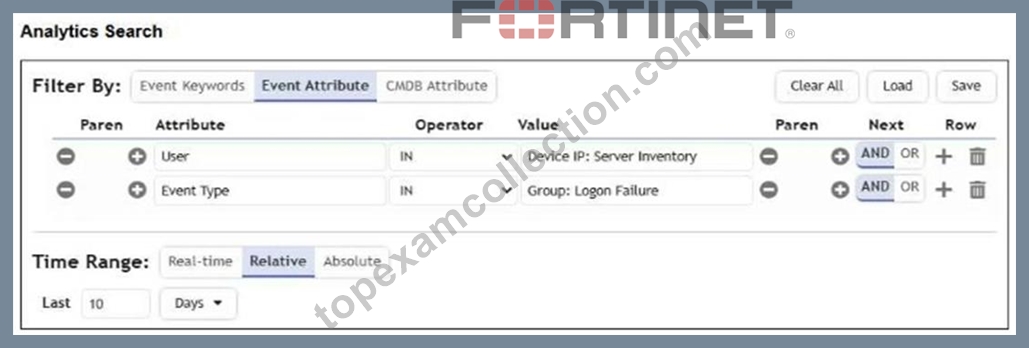
The analyst is troubleshooting the analytics query shown in the exhibit.
Why is this search not producing any results?
- A. The inner and outer nested query attribute types do not match.
- B. You cannot reference User and Event Type attributes in the same search.
- C. The Time Range is set incorrectly.
- D. The Boolean operator is wrong between the attributes.
Answer: A
Explanation:
The issue is that the "User" attribute is incorrectly assigned a Device IP group value, which is a mismatch of attribute types. "User" expects a user name or identity, not a device IP group. This mismatch between the attribute type and the provided value causes the search to return no results.
NEW QUESTION # 26
Refer to the exhibit.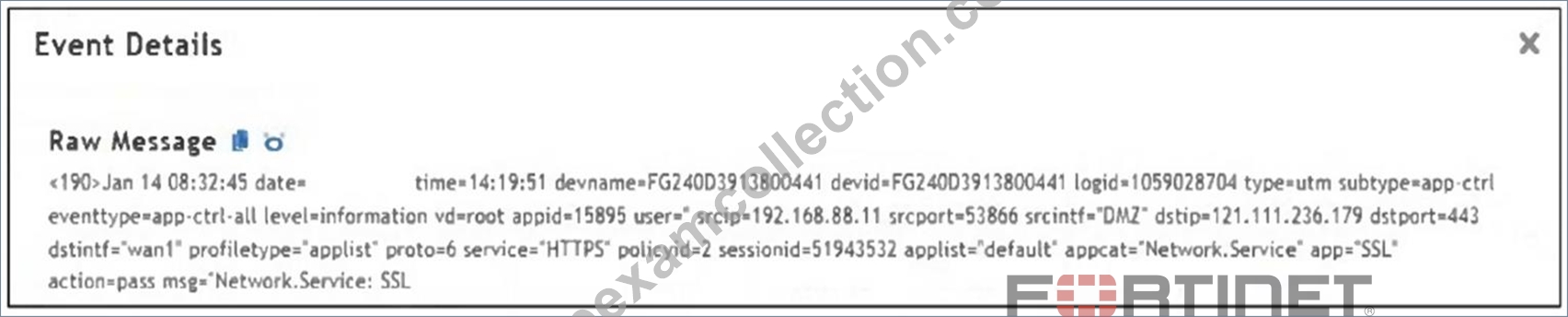
Which value would you expect the FortiSIEM parser to use to populate the Application Name field?
- A. applist
- B. Network.Service
- C. SSL
- D. wan1
Answer: C
Explanation:
The Application Name field in FortiSIEM is typically populated using the value of the app field in the raw log. In this event, app="SSL", so "SSL" is the expected application name parsed by FortiSIEM.
NEW QUESTION # 27
Refer to the exhibit.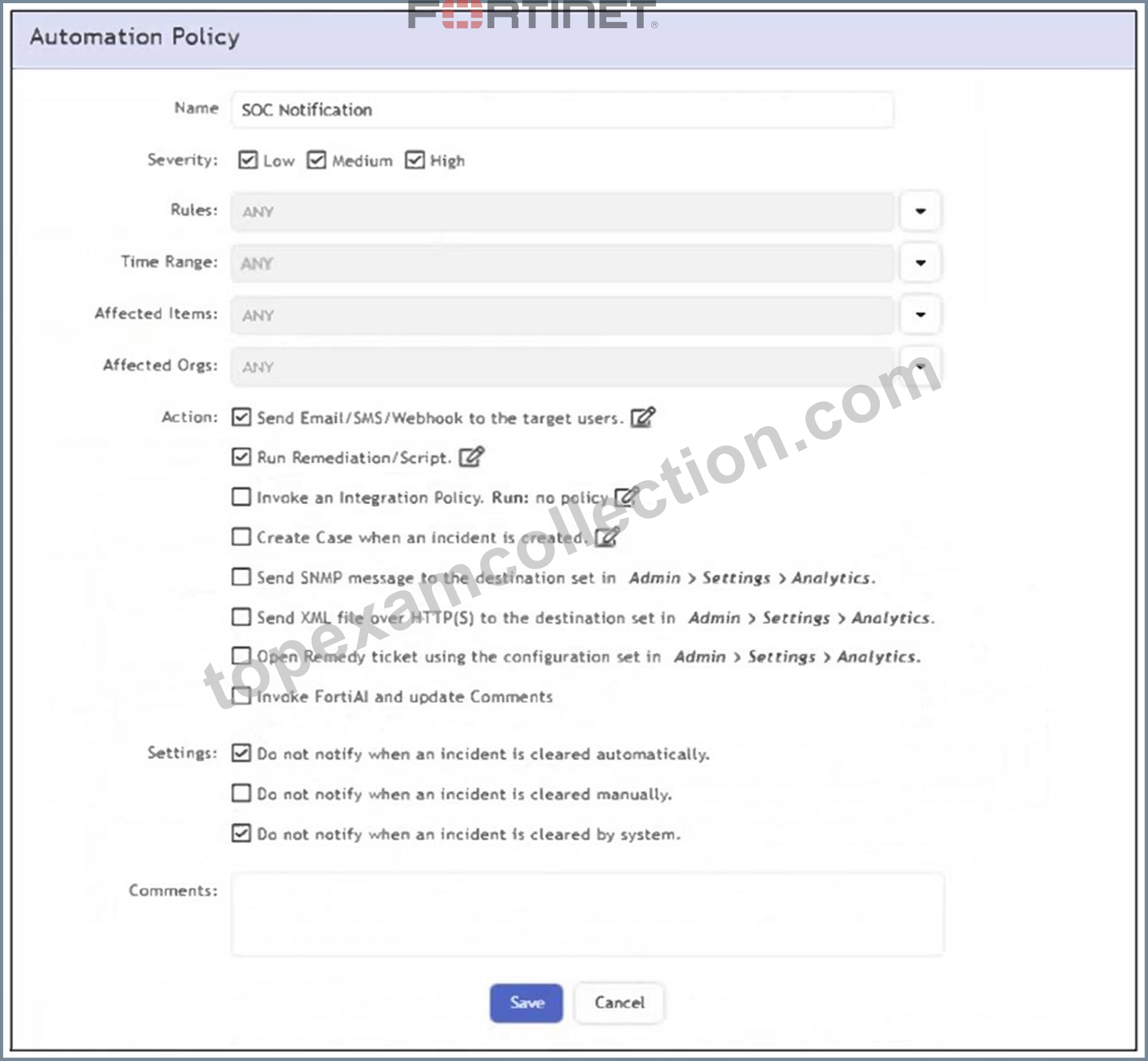
What happens when an analyst clears an incident generated by a rule containing the automation policy shown in the exhibit?
- A. The remediation script is run.
- B. No notification is sent.
- C. An email is sent to the SOC manager.
- D. A notification is sent to the SOC manager dashboard.
Answer: B
Explanation:
The automation policy has the option "Do not notify when an incident is cleared manually" enabled. Therefore, when an analyst manually clears an incident, no notification or automation action is triggered.
NEW QUESTION # 28
Refer to the exhibit.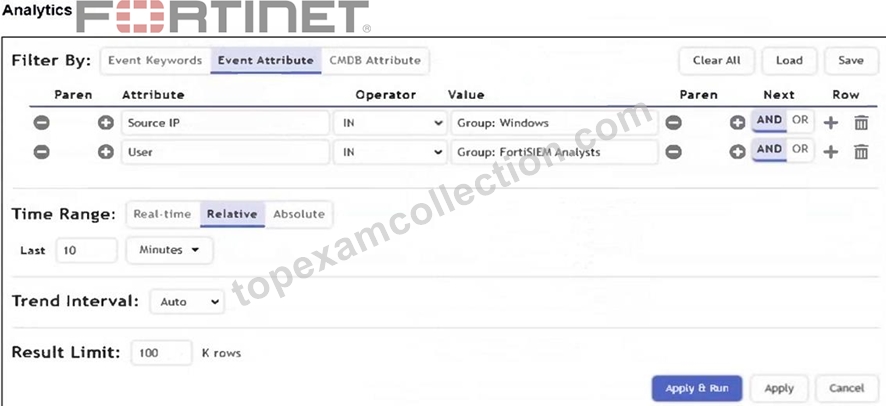
What is the Group: FortiSIEM Analysts value referring to?
- A. FortiSIEM organization group
- B. CMDB user group
- C. LDAP user group
- D. Windows Active Directory user group
Answer: B
Explanation:
In FortiSIEM, the value Group: FortiSIEM Analysts under the User attribute refers to a CMDB user group. These groups are defined within FortiSIEM's CMDB and used to logically organize users for analytics, correlation rules, and reporting.
NEW QUESTION # 29
Which two settings must you configure to allow FortiSIEM to apply tags to devices in FortiClient EMS? (Choose two.)
- A. FortiSIEM API credentials defined on FortiEMS\
- B. FortiEMS API credentials defined on FortiSIEM
- C. Remediation script configured
- D. ZTNA tags defined on FortiSIEM
Answer: A,B
Explanation:
To allow FortiSIEM to apply tags to devices in FortiClient EMS, FortiEMS API credentials must be defined on FortiSIEM to enable communication with EMS, and FortiSIEM API credentials must be defined on FortiEMS to allow EMS to accept tagging instructions from FortiSIEM. This bidirectional API trust is essential for tag application.
NEW QUESTION # 30
When configuring anomaly detection machine learning, in which step must you select the fields to analyze?
- A. Prepare Data
- B. Train
- C. Schedule
- D. Design
Answer: A
Explanation:
In the Prepare Data step of configuring anomaly detection in FortiSIEM, you must select the fields to analyze. This step defines the input features that the machine learning model will evaluate during training and detection.
NEW QUESTION # 31
......
Actual Questions Answers Pass With Real FCP_FSM_AN-7.2 Exam Dumps: https://www.topexamcollection.com/FCP_FSM_AN-7.2-vce-collection.html
FCP_FSM_AN-7.2 Dumps Prepare Your Exam With 34 Questions: https://drive.google.com/open?id=1_OcXbANHdNogklWBi3U4zTJY3scRf1Jf
